2nd LACSUG CONFERENCE

Subnational Governance in Latin America: Building Effective Institutions in Turbulent Times

Facultad de Gobierno, Universidad de Chile
Santiago de Chile, 24 - 26 June 2026

IMPORTANT
Participants are reminded that the deadline to submit the full paper is June 12, 2026, to lacsug.conference@gmail.com

Paper Format
Language: English
Length: 8,000–12,000 words
Font: Times New Roman, 11 pt
Line spacing: 1.5
Citations and references: APA (7th edition)

[ About Conference ]

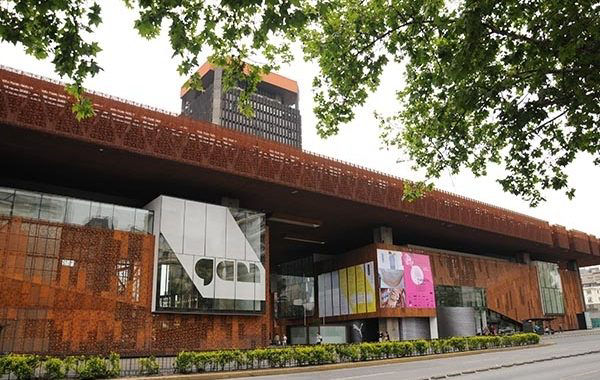
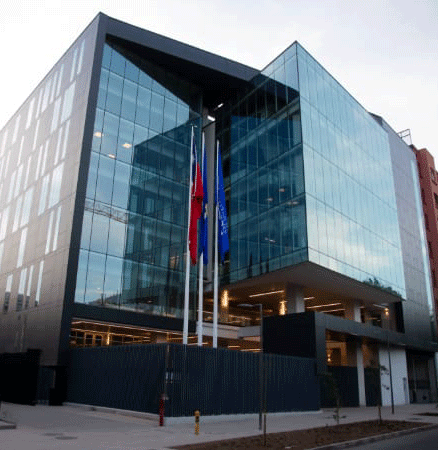
Welcome to the second conference of the Latin American Network on Subnational Governance (LANSUG). This edition has been organized by the Departamento de Administración y Gestión Pública, Universidad de Chile and the University of Chicago Crown Family School of Social Work, Policy, and Practice. This guide provides essential information on the conference program and local details for your stay. The conference will take place at the VM20 Universidad de Chile Complex, which houses the Facultad de Gobierno and other academic units.

Conference

Location: Ramón Carnicer 15, Providencia, Santiago. Nearest metro: Baquedano station, Lines 1 and 5

Language: The working language for all presentations and debates will be English.

Meals: The organizing committee will provide conference meals, including lunch, coffee breaks, a welcome dinner, and a closing reception.
About Universidad de Chile

The Universidad de Chile, recognized for its highest accreditation and scientific leadership, consolidates its public mission in the VM20 building. This urban landmark brings together the Facultad de Gobierno, Instituto de Estudios Internacionales and the Centro de Extensión Artística y Cultural - CEAC, highlighting the Gran Sala Sinfónica Nacional as a hub of acoustic excellence. In this way, the complex links civic education, social research and cultural outreach in a cutting-edge space for the country's development.

[ Lunch with Journal Editors ]

LACSUG 2026 will host a special lunch bringing together conference participants and editors of leading journals in public administration and subnational governance. The session offers an open space for informal conversation about publishing pathways, ongoing editorial priorities, and the development of research agendas relevant to Latin American subnational scholarship

Moderator: Ricardo Bello-Gomez, Rutgers University
Claudia Avellaneda
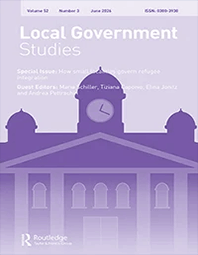
Local Government Studies
Mariana Chudnovsky
Public Administration and Development
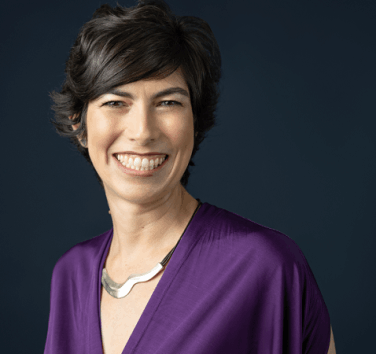
Gabriela Lotta
Journal of Public Administration Research and Theory
Pablo Sanabria-Pulido
Public Administration Quarterly

[ Academic Conversation ]

LACSUG 2026 will feature an Academic Fireside Conversation bringing together three leading scholars of subnational governance for an in-depth dialogue on the state of the field, current research frontiers, and the place of Latin American scholarship in global debates on public administration and decentralization.

Gabriela Lotta
Keynote Speaker

Gabriela Lotta is Professor of Public Administration and Government at Fundação Getulio Vargas (FGV-EAESP) and ENAP in Brazil, and coordinator of the Bureaucracy Studies Center (NEB). She received her B.Sc. and M.Sc. in Public Administration from FGV and her PhD in Political Science from the University of São Paulo (USP). A leading scholar on bureaucracy, policy implementation, and street-level workers, she was named by Apolitical in 2021 as one of the 100 most influential academics in government worldwide.

Guillermo Cejudo
Keynote Speaker

Guillermo Cejudo is Professor in the Public Administration Division at Centro de Investigación y Docencia Económicas (CIDE) in Mexico City. He holds a PhD in Political Science from Boston University. He is a Level III member of Mexico's Sistema Nacional de Investigadores and a member of the Mexican Academy of Sciences. His research focuses on policy coordination, social policy, accountability, and subnational governance in Latin America, with extensive work on Mexican federalism. He recently co-edited Policy Dismantling in Latin America: Political Leadership and Bureaucratic Erosion in Argentina, Brazil and Mexico (Palgrave Macmillan, 2026).

Verónica Figueroa
Keynote Speaker

Verónica Figueroa Huencho is a Full Professor at the Faculty of Government of the Universidad de Chile. She holds a degree in Public Administration from the Universidad de Chile and a PhD in Management Sciences from ESADE, Universitat Ramon Llull (Spain).
She completed a postdoctoral fellowship at the Center for Latin American Studies at Stanford University (2013) and was a Visiting Scholar at Harvard University's David Rockefeller Center for Latin American Studies (2020). Her research focuses on the formulation and implementation of indigenous public policy in contexts of diversity, and she is the author of several books on the topic, including Formulación de políticas públicas indígenas en Chile. 

Claudia Avellaneda
Convenor

Claudia Avellaneda is Professor at the Paul H. O'Neill School of Public and Environmental Affairs at Indiana University Bloomington and Fischer Faculty Fellow. She holds a PhD in Political Science from Texas A&M University and was elected Fellow of the National Academy of Public Administration (NAPA) in 2023. Her research examines local government performance and the role of mayors in Latin American municipalities. She is editor of What Works in Latin American Municipalities? (Edward Elgar, 2023) and co-editor with Ricardo Bello-Gómez of the Handbook on Subnational Governments and Governance (Edward Elgar, 2024).

[ Pre-Conference Workshop ]

Both workshops will take place concurrently on Wednesday, June 24, from 2:00 to 4:30 pm. Participation is optional. To register, please fill out the form at the end of this section. Please select one option.
Workshop 1
Network Analysis and Subnational Governance

This workshop introduces the foundations and applications of Social Network Analysis (SNA), a set of methods with high potential for the study of subnational governance and public affairs. Network approaches offer powerful tools to examine how actors — including subnational government agencies, civil society organizations, and private stakeholders — form and sustain relationships that shape policy processes, collective decision-making, and governance outcomes.
The workshop presents key methodological tools of SNA, including basic descriptives, an introduction to modeling based on Exponential Random Graph Models (ERGM) and Stochastic Actor-Oriented Models (SAOM). Concepts and tools will be presented through guided tutorials and examples from governance research, giving participants a grounded understanding of both the theoretical foundations and the practical applications of network methods. No prior experience in network analysis is required, though some familiarity with R is helpful. (With support from Fondecyt Project N°11241435)

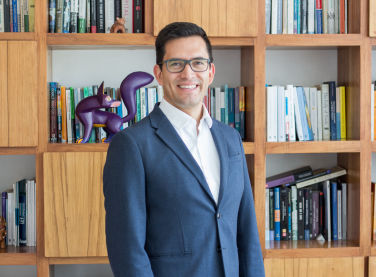
Alejandro Espinosa-Rada

Assistant Professor, Pontificia Universidad Católica de Chile. PhD in Sociology, Mitchell Centre for Social Network Analysis, University of Manchester. Founder of the Chilean Society for Social Network Science (CHiSocNet). His research focuses on social network analysis, network modelling, and computational social science. He is co-author of the book Redes Sociales. Teoría, Métodos y Aplicaciones en América Latina and developer of the R package netmem for SNA. Google Scholar · Website · GitHub

Workshop 2
Process Tracing Methods for Subnational Analysis

Process tracing is a qualitative method for causal inference that allows researchers to open the "black box" of causality by reconstructing the mechanisms through which a cause produces an outcome within a case. Rather than comparing outcomes across many cases, it examines the sequence of events and conditions that explain why and how a particular result occurred — making it especially valuable for the study of subnational governance, where contextual variation and institutional complexity are central.

This workshop provides a practical introduction to the rationale and application of process tracing in subnational research. Participants will gain insight into when process tracing is most suitable and how to apply it effectively, including how to formulate causal mechanisms, identify and evaluate different types of evidence, and draw valid inferences from within-case analysis. The session combines conceptual foundations with hands-on guidance, and examples will be drawn from subnational governance research in Latin America. No prior experience with the method is required. (With support from Fondecyt Project N°1240892)

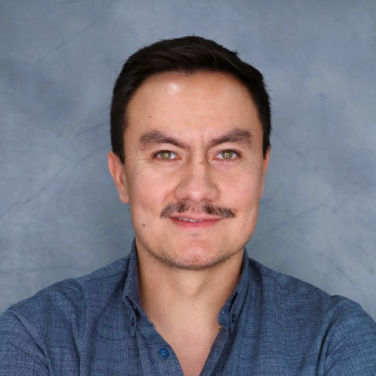
Cecilia Osorio Gonnet

Associate Professor, Faculty of Government, Universidad de Chile. PhD in Political and Social Sciences, Universitat Pompeu Fabra. Co-editor of Revista Estado, Gobierno y Gestión Pública. Her research focuses on public policy processes, social policy, and policy diffusion in Latin America. She has applied process tracing in a recently published article on policy innovation at the local level. Google Scholar · Institutional Profile · REGGP

Antoine Maillet

Associate Professor, Faculty of Government, Universidad de Chile. PhD in Political Science, Sciences Po Paris and Pontificia Universidad Católica de Chile. Co-editor of Revista Estado, Gobierno y Gestión Pública. His work focuses on the politics of public policy, environmental governance, and multilevel governance. He is co-author of a leading article on process tracing and has taught this methodological tool for more than a decade. Google Scholar · Institutional Profile · REGGP

Registration Form

Please enter your full name and only one of the alternatives.

- Workshop 1
- Workshop 2

[ Conference Panels ]

Explore the full details of the conference panels by clicking on the button below.

>> This program is preliminary and may be subject to adjustments.
The final version will be shared with participants prior to the conference. <<

[ Practical Information ]

Suggested Hotels

The conference area offers a wide range of hotel options. The following are within a 25-minute walk from the conference venue. We recommend checking availability as soon as possible, as the conference dates coincide with the Chilean winter school holidays.

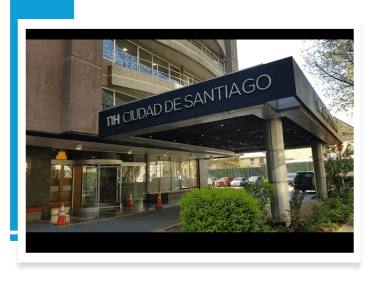
Hotel NH Ciudad de Santiago  *Preferential Rates*

Preferential rates are available for LACSUG 2026 participants. To book at the preferential rate, contact: aa.valdivia@nh-hotels.com cc: nhciudaddesantiago@nh-hotels.com. Please mention that you are attending LACSUG 2026.
• Location: Condell 40, Providencia
Web Site

Hotel Cumbres Lastarria  *Preferential Rates*

Preferential rates are available for LACSUG 2026 participants at this link https://reservations.travelclick.com/97344?RatePlanId=11267711
• Location: José Victorino Lastarria 299, Santiago
Web Site

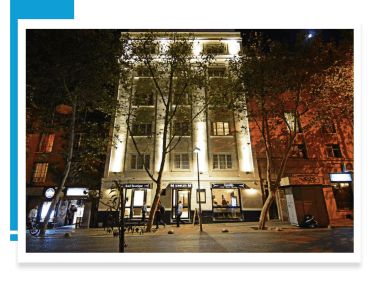
Hotel Sommelier Boutique 

• Location: Merced 433, Santiago
Web Site

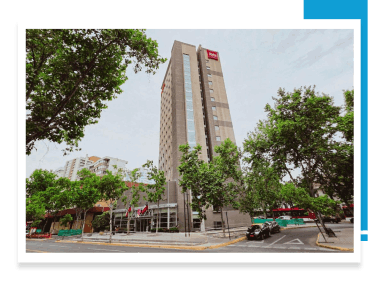
Hotel Ibis Providencia

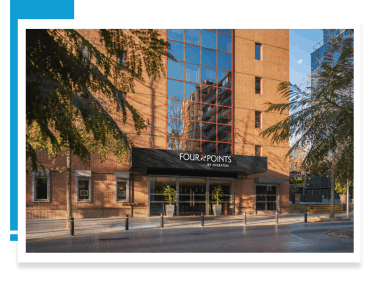
Hotel Four Points by Sheraton Santiago

Hotel Location Map

[ Public Transport ]

Santiago's public transportation system

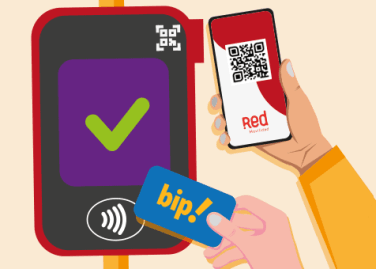
Santiago's public transportation system is built around an extensive metro network (both underground and elevated) combined with a large fleet of electric buses. Payment is made using Bip! card, a rechargeable card that deducts the cost of each trip (approx. 900 Chilean pesos / USD 1 per ride).

How can I purchase it?

Purchase at metro stations: ticket offices or vending machines for 1.540 CLP (USD 1.80). You can pay with a credit card, debit card, or Chilean pesos (foreign currency not accepted).

How to use it

It can be used by tapping the card on readers at buses and metro stations. The system allows transfers with fare integration (single fare within 2 h, up to two transfers: Metro-Bus or Bus-Bus).

Rideshare Apps

Uber, DiDi, and Cabify are widely available in Santiago. If using a taxi, always request a taximeter. Note that street taxis generally only accept cash in Chilean pesos.

[ Cultural Center ]

Violeta Parra Museum

• 2-minute walk from VM20, across Av. Vicuña Mackenna

Gabriela Mistral Cultural Center - GAM

• 10-minute walk from VM20, along Avenida Libertador Bernardo O’Higgins (Alameda).

National Library of Chile

• 15-minute walk from VM20, along Av. Libertador Bernardo O’Higgins (Alameda)

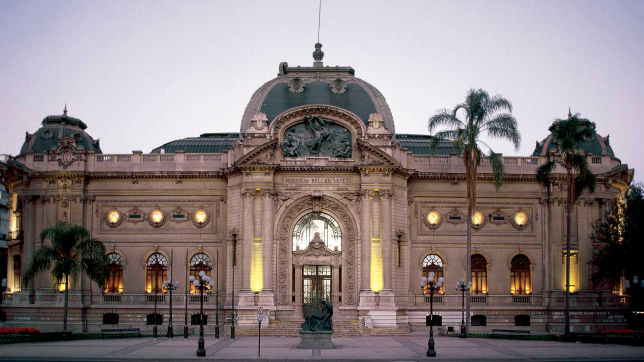
National Museum of Fine Arts & Museum of Contemporary Art

Both museums are adjacent to each other in the Parque Forestal area of Santiago • Free admission • Hours: Tuesday to Sunday, 10:30 - 17:30 h.
Location: José Miguel de la Barra 650, Santiago

[ Bookshop ]

> Librería Ulises

WEB SITE > LOCATION

> Librería Fondo de Cultura Económica

WEB SITE > LOCATION

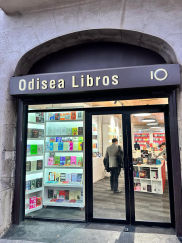
> Librería Odisea Libros

WEB SITE > LOCATION

> Librería del GAM Centro Cultural Gabriela Mistral

WEB SITE > LOCATION

Librería Amanda Labarca / FCE
(inside the National Library)

> Libreria La Inquieta

> La Tienda Nacional

WEB SITE > LOCATION

[ Organizing Committee ]

Claudia N. Avellaneda
Indiana University Bloomington, USA

Guillermo M. Cejudo
Centro de Investigación y Docencia Económicas, México

Edgar Ramírez
University of Nevada, Las Vegas, USA

Eduardo Grin
FGV EAESP, Brazil

Pablo Sanabria-Pulido
Universidad Icesi, Colombia

Nathalie Méndez
Universidad de los Andes, Colombia

Alan Zarychta
University of Chicago, USA

Ricardo A. Bello-Gómez
Rutgers University, USA

Karina Retamal
Universidad de Chile, Chile

2nd LACSUG CONFERENCE
Subnational Governance in Latin America: Building Effective Institutions in Turbulent Times